
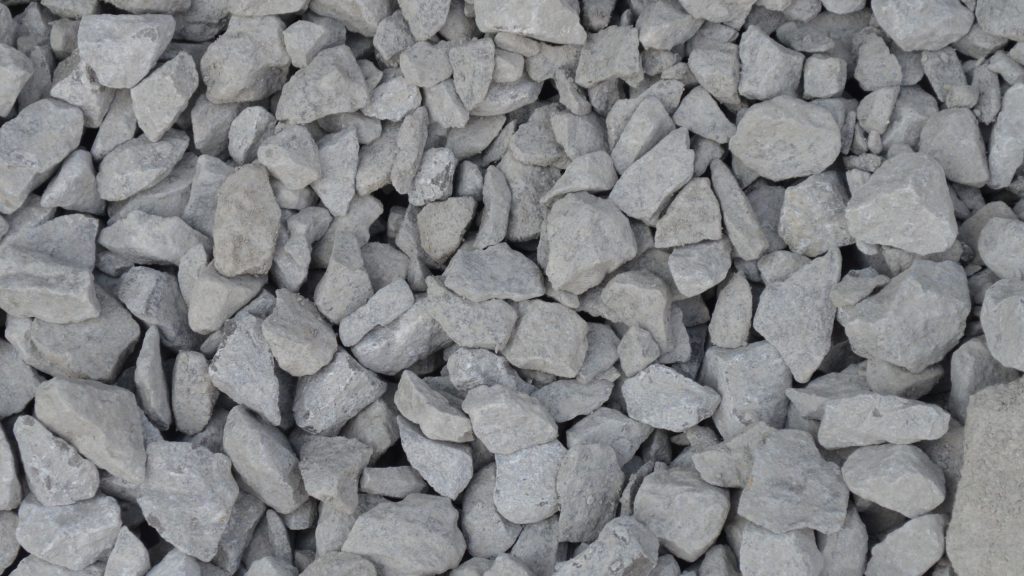
A strong road is not built only with asphalt or concrete. Its strength depends heavily on the layers constructed beneath the visible road surface. One of the most important supporting layers is the granular sub base, commonly known as GSB.
The GSB layer distributes traffic loads, improves drainage and provides a stable foundation for the upper pavement layers. Proper material selection, grading, moisture control and compaction are essential for achieving the required performance.
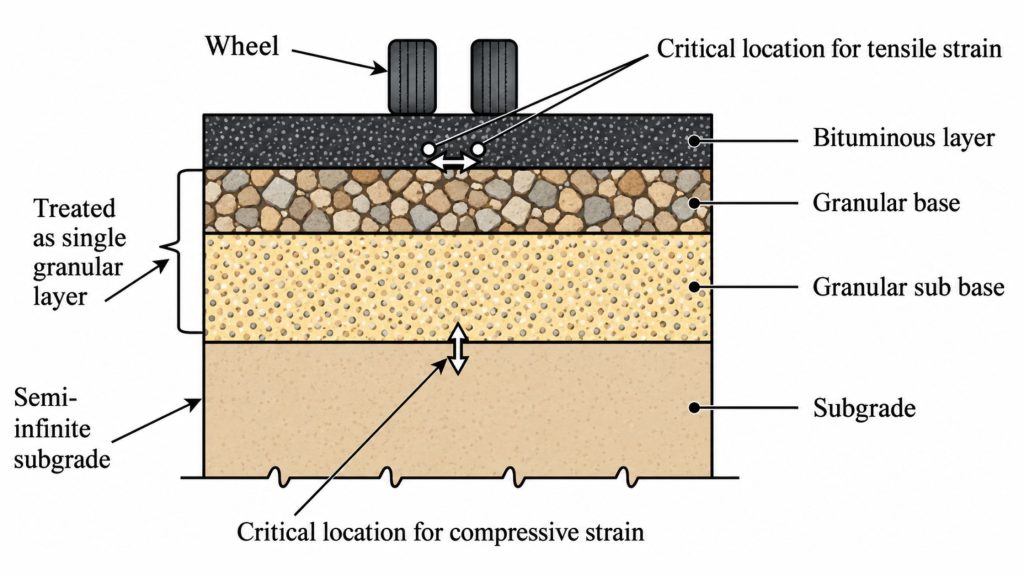
A granular sub base is a layer of selected granular materials constructed above the prepared soil foundation, known as the subgrade, and below the road base course.
In simple terms, it creates a strong working platform between the natural soil and the upper road layers. It helps transfer vehicle loads over a wider area so that the subgrade does not become overstressed or damaged.
The term granular sub base GSB refers to a mixture generally containing crushed stone, gravel, natural sand or other approved granular material. The exact composition depends on the pavement design, soil condition, traffic load and applicable project specifications.
What Is Granular Sub Base in Road Construction?
To understand what is granular sub base in road construction, consider a typical flexible pavement consisting of the following layers:
- Compacted subgrade
- Granular sub base
- Wet Mix Macadam or another base course
- Bituminous base course
- Bituminous surface or wearing course
The GSB layer in road construction is placed directly over the compacted subgrade. It forms the first structural pavement layer and provides a level, stable surface for constructing the layers above it.
In concrete roads, GSB may also be placed between the subgrade and dry lean concrete or pavement quality concrete layers.
Importance of the GSB Layer
A properly constructed GSB layer in road projects performs several important functions.
1. Load Distribution
Vehicle loads applied to the road surface are transferred downward through different pavement layers. The GSB spreads these loads across a wider area, reducing pressure on the underlying soil.
2. Drainage
Water is one of the biggest causes of pavement failure. A suitably graded granular layer allows water to drain away and helps prevent moisture from accumulating within the pavement structure.
3. Stable Construction Platform
The GSB layer creates a firm and uniform working surface for construction equipment and for laying the road base course.
4. Separation and Filtration
GSB helps prevent the subgrade soil from mixing with the upper pavement materials. Proper gradation can also reduce the movement of fine soil particles into the base course.
5. Improved Pavement Life
A well-designed and properly compacted GSB reduces settlement, rutting, cracking and deformation, thereby increasing the service life of the road.
Granular Sub Base Material
Common granular sub base material includes:
- Crushed stone aggregates
- Natural gravel
- Gravel and sand mixtures
- Crushed rock
- Moorum, where approved
- Recycled aggregates meeting project requirements
- Other durable granular materials approved by the engineer
The material should be hard, durable and free from vegetation, organic matter, clay lumps and other harmful substances.
The final selection should be based on laboratory testing and the applicable granular sub base material specification. Materials should not be accepted only through visual inspection.
Granular Sub Base Material Size and Gradation
The granular sub base material size is determined by the specified grading category and pavement design. GSB normally contains a controlled combination of coarse aggregates and fine particles rather than aggregates of a single size.
Granular sub base gradation means the distribution of different particle sizes within the material. It is checked through sieve analysis. A well-graded mixture contains particles of various sizes that fit together effectively and develop a dense, stable layer after compaction.
If the material contains excessive fines, drainage may be affected. If it has too many large particles or insufficient fines, proper interlocking and compaction may become difficult.
Therefore, the contractor must follow the approved grading envelope and project specification instead of using a fixed material size for every road.
Granular Sub Base Mix Design and Material Ratio
A granular sub base mix design determines the suitable combination of available aggregates required to meet the specified gradation and engineering properties.
There is no universal granular sub base material ratio that is suitable for every project. The proportion of crushed aggregate, gravel, sand and fine material depends on:
- Available material sources
- Required gradation
- Strength requirements
- Drainage requirements
- Plasticity of fines
- Field compaction performance
- Applicable highway or project standards
Trial mixes and laboratory tests should be conducted before approving the final combination. The selected mixture must consistently meet the required specifications during production and laying.
Granular Sub Base Thickness
The required granular sub base thickness depends on the pavement design. Important factors include:
- Expected traffic volume and axle loads
- Strength of the subgrade
- Type of pavement
- Drainage conditions
- Climate and rainfall
- Quality of GSB material
- Design life of the road
The total GSB thickness may be constructed in one or more compacted layers. Each layer must be kept within the permitted compacted thickness so that the equipment can compact the material uniformly throughout its depth.
The design engineer should determine the final thickness. Using a standard thickness without considering site conditions may result in either unnecessary cost or inadequate pavement strength.
Granular Sub Base Density
Granular sub base density indicates how closely the particles are packed after compaction. Proper density is essential because a loosely compacted GSB can settle under traffic, leading to surface deformation and pavement failure.
People frequently search for granular sub base density kg m3, but there is no single density value applicable to every GSB material. Density varies according to aggregate type, gradation, moisture content and compaction effort.
Laboratory testing establishes the Maximum Dry Density and Optimum Moisture Content of the selected material. Field density results are then compared with these laboratory values to confirm the percentage of compaction achieved.
Granular Sub Base Construction Process
The main stages of granular sub base construction include:
Subgrade Preparation
The subgrade is brought to the required line, level and cross-fall. Weak areas are repaired, and the surface is properly compacted before GSB placement.
Material Spreading
Approved GSB material is transported and spread uniformly using suitable equipment. Segregation of coarse and fine particles must be avoided.
Moisture Adjustment
Water is added or the material is aerated until its moisture content is close to the optimum level required for compaction.
Grading and Levelling
A motor grader is used to achieve the specified thickness, profile, camber and cross-fall.
Compaction
The material is compacted using an appropriate roller. Rolling generally continues until the specified field density is achieved without causing material crushing or surface movement.
Quality Inspection
Engineers check levels, thickness, width, surface regularity, moisture and compaction before permitting construction of the next pavement layer.
Granular Sub Base Test Requirements
A typical granular sub base test programme may include:
- Sieve analysis for gradation
- Atterberg limits or plasticity checks
- Proctor compaction test
- Field density test
- Moisture-content test
- California Bearing Ratio test
- Aggregate impact or crushing-value test
- Soundness and water-absorption tests, where specified
The exact test frequency and acceptance limits must follow the approved quality plan and contract specification.
Granular Sub Base Price
The granular sub base price varies according to the material source, aggregate quality, grading requirement, transportation distance, layer thickness, project quantity and local labour and equipment rates.
A proper quotation should clarify whether the rate includes material supply, transportation, royalty, loading, spreading, watering, grading, compaction, testing and machinery. Comparing quotations only on a per-tonne or per-cubic-metre basis may be misleading if the included work differs.
Conclusion
The granular sub base is a critical foundation layer in both flexible and rigid pavement construction. It improves load distribution, drainage, stability and overall pavement durability.
Successful granular sub base in road construction requires more than simply spreading aggregates over the soil. The material must meet the specified gradation, strength and plasticity requirements, while construction must maintain proper moisture, thickness, levels and density.
When the GSB layer in road construction is designed and executed correctly, it provides a reliable foundation for the upper pavement layers and significantly reduces the risk of premature road failure.
Frequently Asked Questions ( FAQ )
Granular Sub Base (GSB) is a layer of well-graded granular material placed above the prepared subgrade and below the base course. It provides a stable foundation for the road pavement.
GSB distributes traffic loads, improves pavement stability, supports drainage, and helps protect the road structure from moisture and subgrade-related problems.
GSB commonly uses crushed stone, gravel, and other approved granular materials. The material must meet the specified grading and quality requirements for the project.
GSB is the sub-base layer, while Wet Mix Macadam (WMM) is generally used as a base course above it. WMM typically uses a more controlled aggregate mix and is designed to provide higher structural strength.
GSB is laid over the prepared subgrade, spread to the required thickness, watered as needed, and compacted using suitable rollers to achieve the specified density.
Proper compaction reduces air voids, improves load-bearing capacity, minimizes settlement, and creates a firm foundation for the upper pavement layers.
Common quality checks include material grading, moisture content, field density, and compaction tests. The exact requirements depend on the applicable project specifications.
GSB thickness depends on traffic conditions, soil strength, drainage requirements, and pavement design. It should be determined according to the approved road design and applicable specifications.
A professional contractor ensures proper material selection, layer preparation, spreading, watering, compaction, and quality control to help achieve a durable road foundation.
Contatc Us